




Industry City and the Rise of the Waterfront Innovation District
For decades, waterfronts like ours in Sunset Park were defined by what they used to be — working industrial ports, warehouses, freight corridors. Today, they’re being recognized for what they’re becoming: some of the most compelling office and innovation destinations in the country.
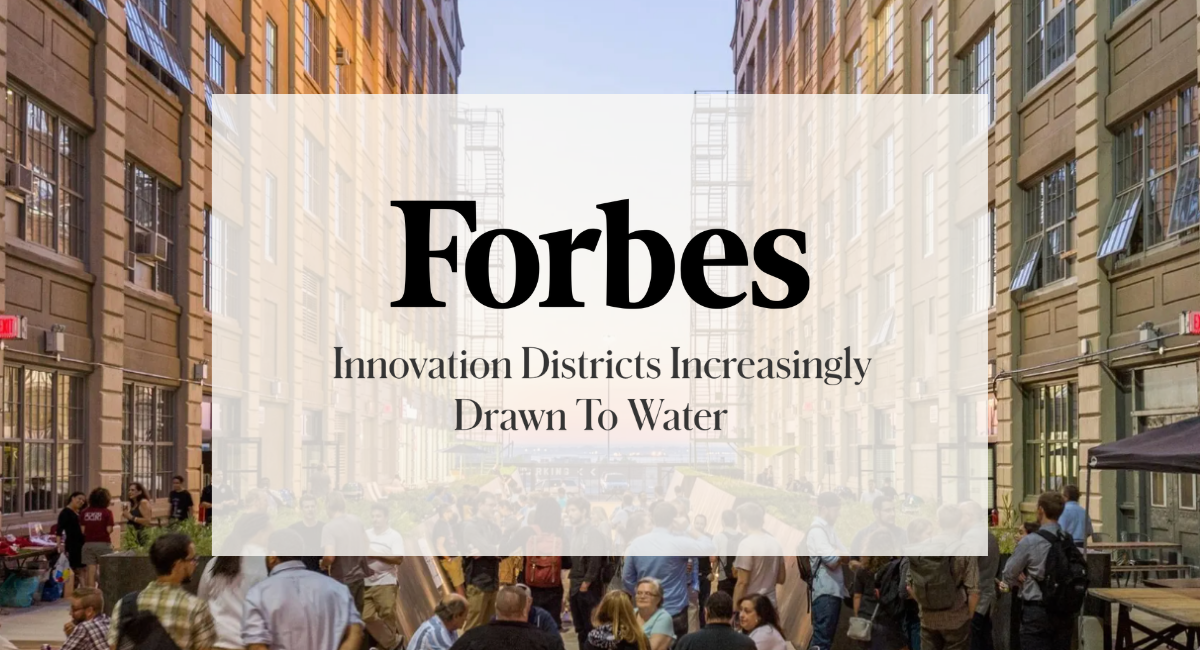
A recent Forbes piece by Jeffrey Steele takes a close look at how innovation districts across the country are increasingly gravitating toward water — and why that’s not a coincidence. Industry City is featured alongside Baltimore Peninsula and The Riverfront Cleveland as examples of how formerly industrial waterfront land is being transformed into something new.
Steele writes that these districts are replacing formerly industrial real estate, with land “transformed into high-value communities promoting attractive live-work-play lifestyles” — situated near city cores and well-connected to transit, with an eye toward long-term climate resilience.
At Industry City, that translates to more than 700 businesses across robotics, life sciences, media and production, AI, food manufacturing, and design — with office spaces ranging from flexible creative suites to large-format enterprise floorplates, all within a 35-acre waterfront campus in Brooklyn. For enterprise companies rethinking their real estate footprint, that combination — significant square footage, a built-in industry community, and a Brooklyn address accessible from Manhattan — is increasingly hard to find anywhere else in New York City.
Randy Peers, President and CEO of the Brooklyn Chamber of Commerce — which relocated its headquarters to IC five years ago — captured it well in the piece:
“At Industry City, you see media and production, artisanal manufacturing and newer AI/technology-driven companies operating alongside unique retailers and food businesses. That proximity reflects how Brooklyn’s creative economy has evolved – less siloed and more interconnected.”
Our own Managing Director Jim Somoza spoke to the broader shift underway:
“They’re no longer built around a single anchor such as a corporate HQ or downtown tower. Instead, we see communities respond best to layered ecosystems where production, public space, culture and daily activity come first.”
That’s what we’re building here. And we’re glad the rest of the country is starting to notice.
[Read the full Forbes piece here:https://www.forbes.com/sites/jeffsteele/2026/04/20/innovation-districts-increasingly-drawn-to-water/]
RELATED STORIES
Onwards and Upwards: Staged to Sell Home
"The year has flown by, and the holidays are fast approaching. This week, we asked 10 designers—Alyssa Alon, Margaret Donaldson,...

ARTIST D’ANA NUNEZ UNVEILS INDUSTRY CITY MURAL
Industry City is thrilled to announce that multidisciplinary artist and creator D'ana Nunez, known as COVL, has completed a vibrant...

Brian Polen gives sake a Brooklyn twist in Industry City
Brooklyn Daily Eagle August 8, 2024 Alice Gilbert Brian Polen. Photo courtesy of Ward 8 Studios Brooklyn might not be...
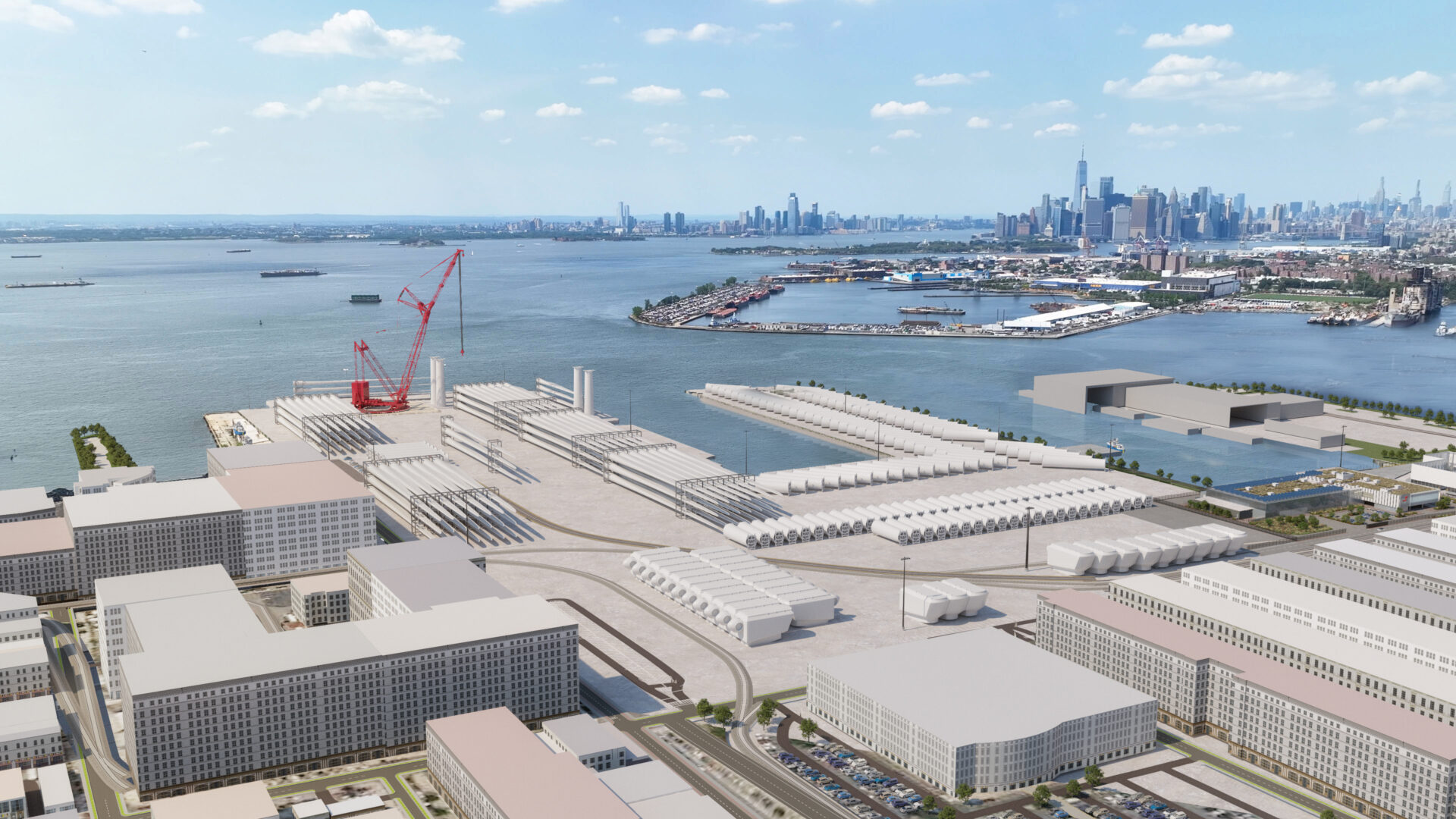
Equinor Breaks Ground on Marine Terminal Key to Supporting Offshore Empire Wind 1
"Today Equinor broke ground on construction at the South Brooklyn Marine Terminal (SBMT), kicking off the revitalization of the venerable...

Gizmo Maker Adafruit Leaves Manhattan for 42K SF at Brooklyn’s Industry City
"Open-source electronics manufacturer Adafruit Industries is breaking up with Manhattan to join a growing hub of tinkerers at Brooklyn’s Industry City. Adafruit signed...

How Athena Calderone Managed to Make a Bare Industrial Warehouse Feel Homey
"Plus more design tricks from her Brooklyn office. Athena Calderone practices what she podcasts. Back in 2020, the EyeSwoon founder offered up a...

Celebrate Asian American Heritage Month With Brooklyn Night Market
"The first Asian American Heritage Month Celebration and Night Market is on May 23 at Industry City. On Thursday, May...
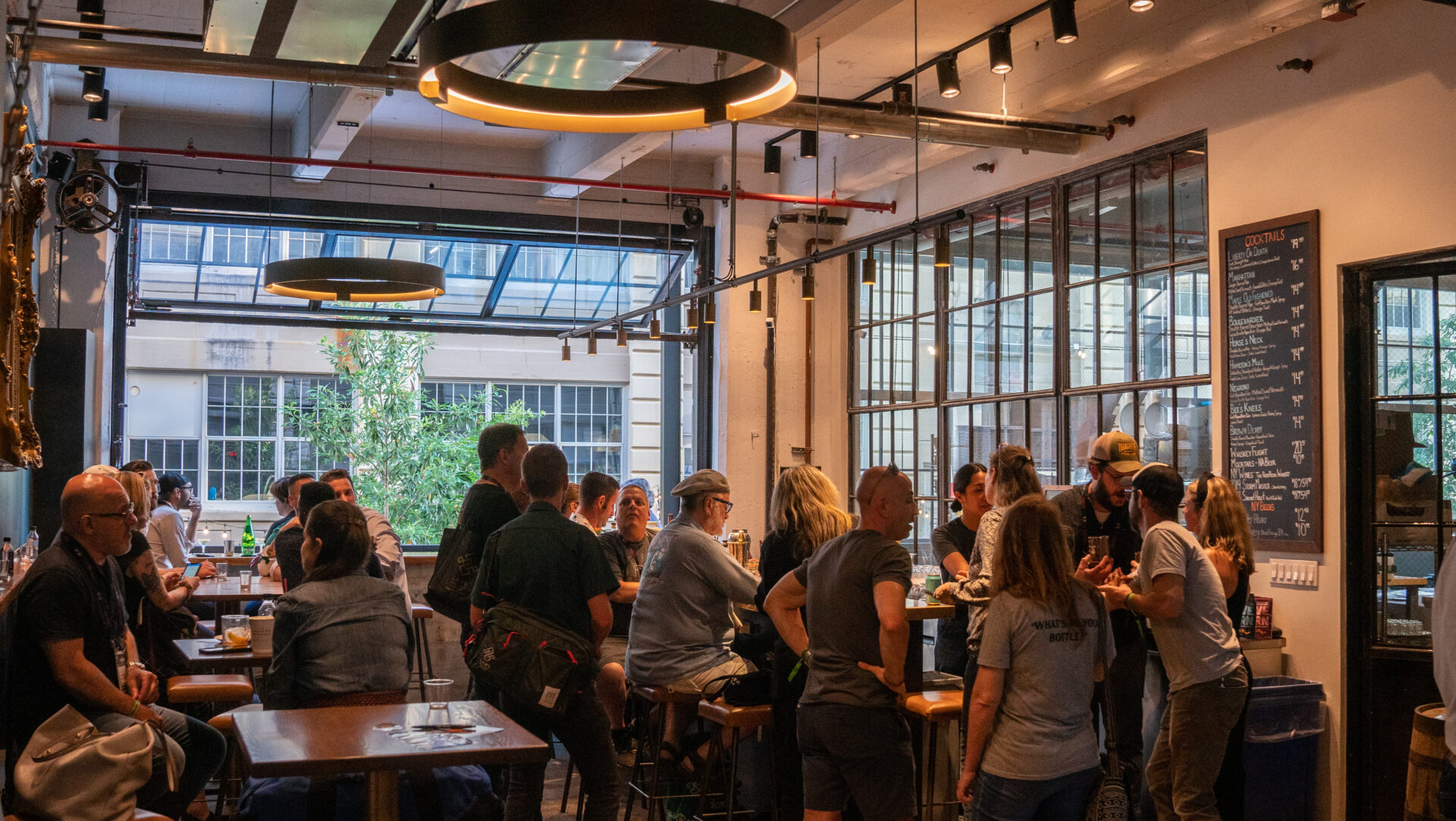
9 Craft Distilleries to Visit in New York City
"When Alex Clark started Fort Hamilton Distillery in 2016, he was among just a handful of craft producers making spirits in New...
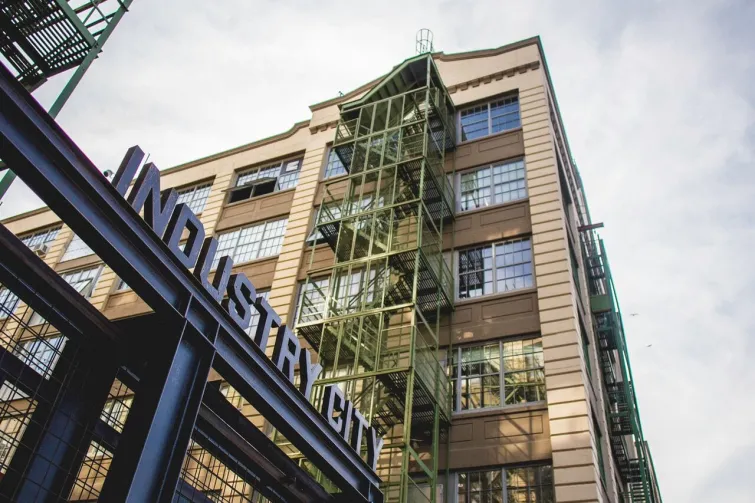
Skanska USA Opening 15K-SF Brooklyn Office for Offshore Wind Project
"The U.S. arm of construction giant Skanska will breeze into a new Brooklyn outpost to serve as a center of operations for...
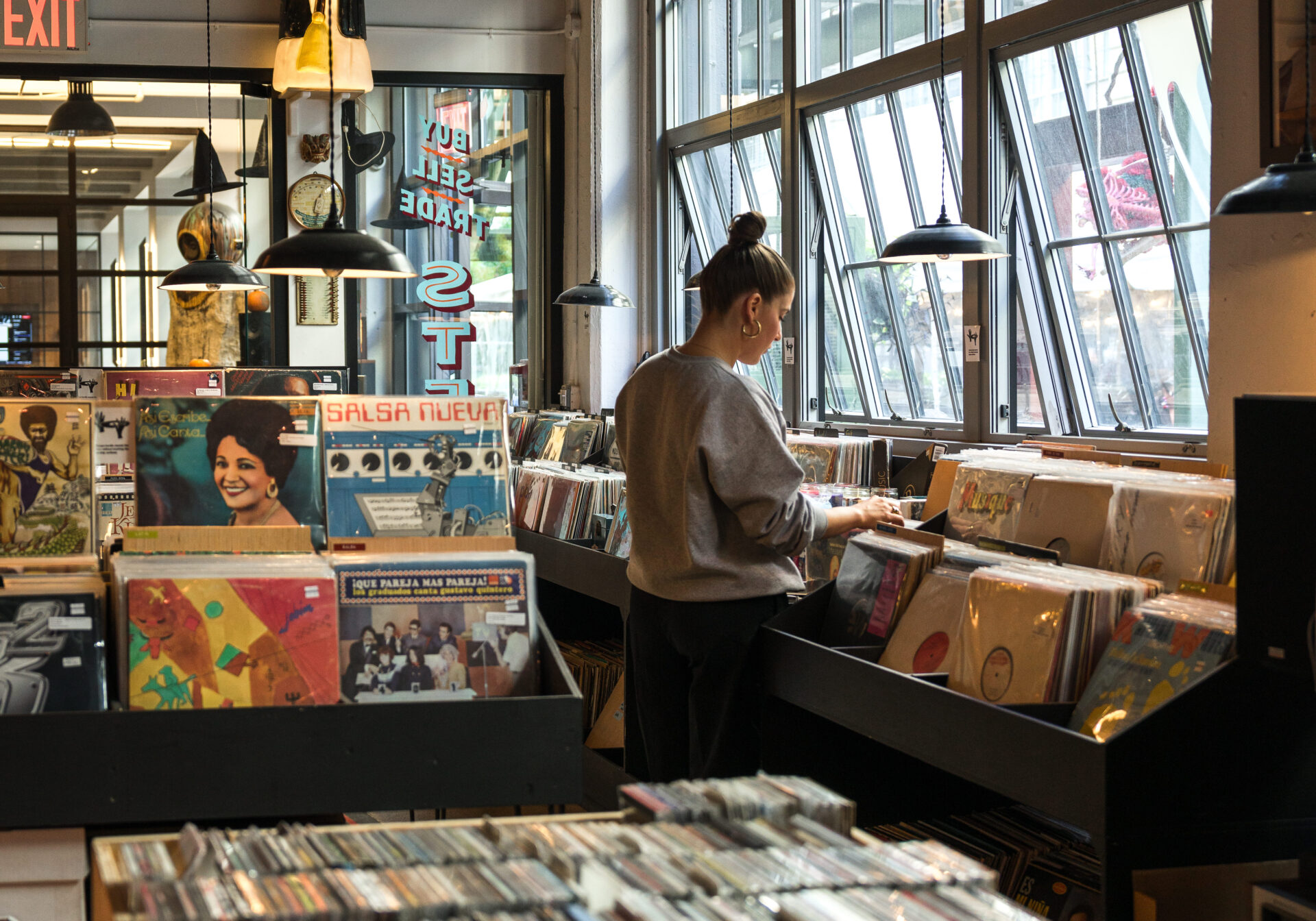
BK Magazine Names Industry City’s HiFi Provisions Among Brooklyn’s Best Record Shops
HiFi Provisions237 36th Street, Industry City "After years of selling records and stereo equipment at the annual Carroll Park flea...
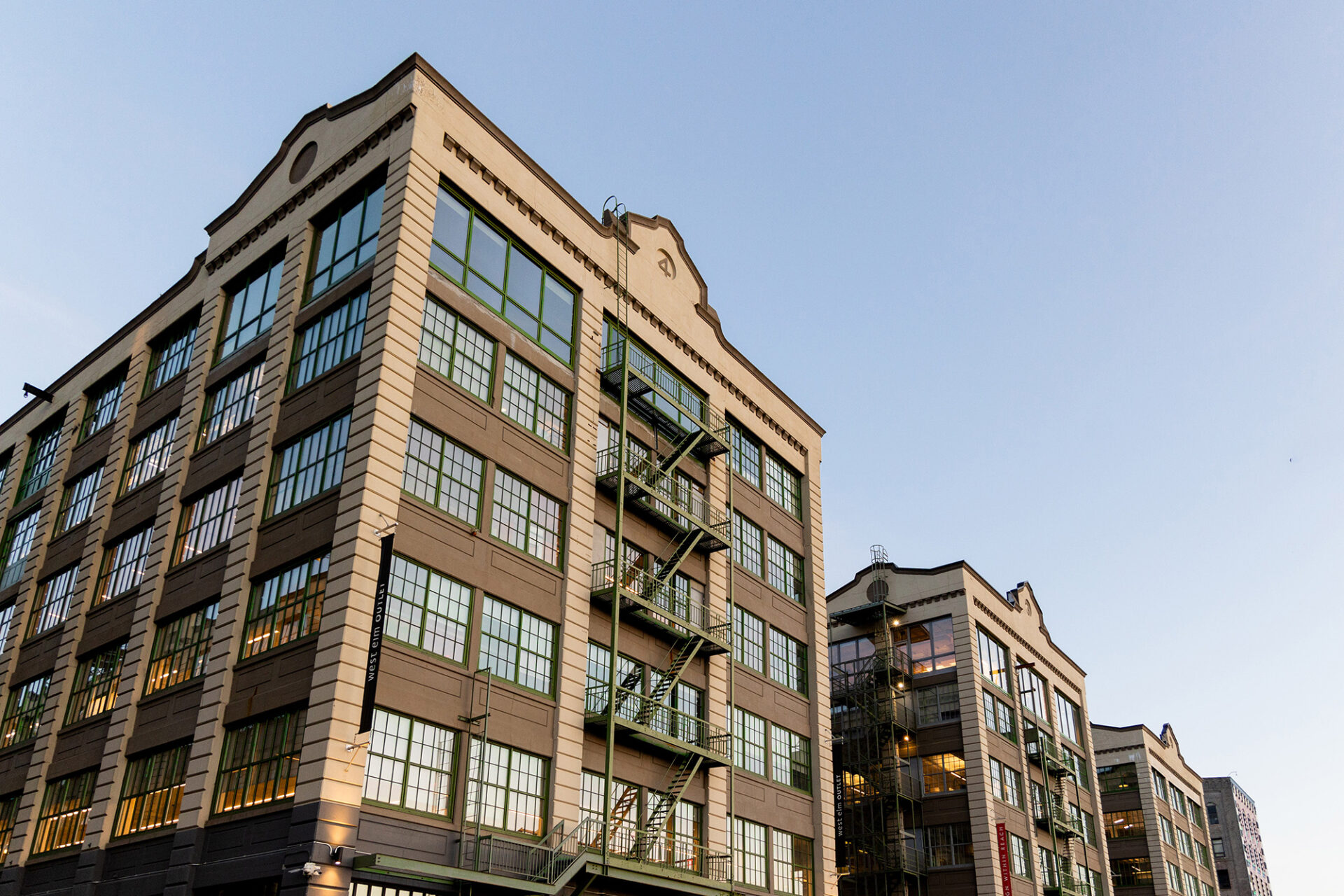
Social Media Company Puff Media Expands to 15K SF at Industry City
"A company that specializes in going viral online needed more space in the material world — and found it in...
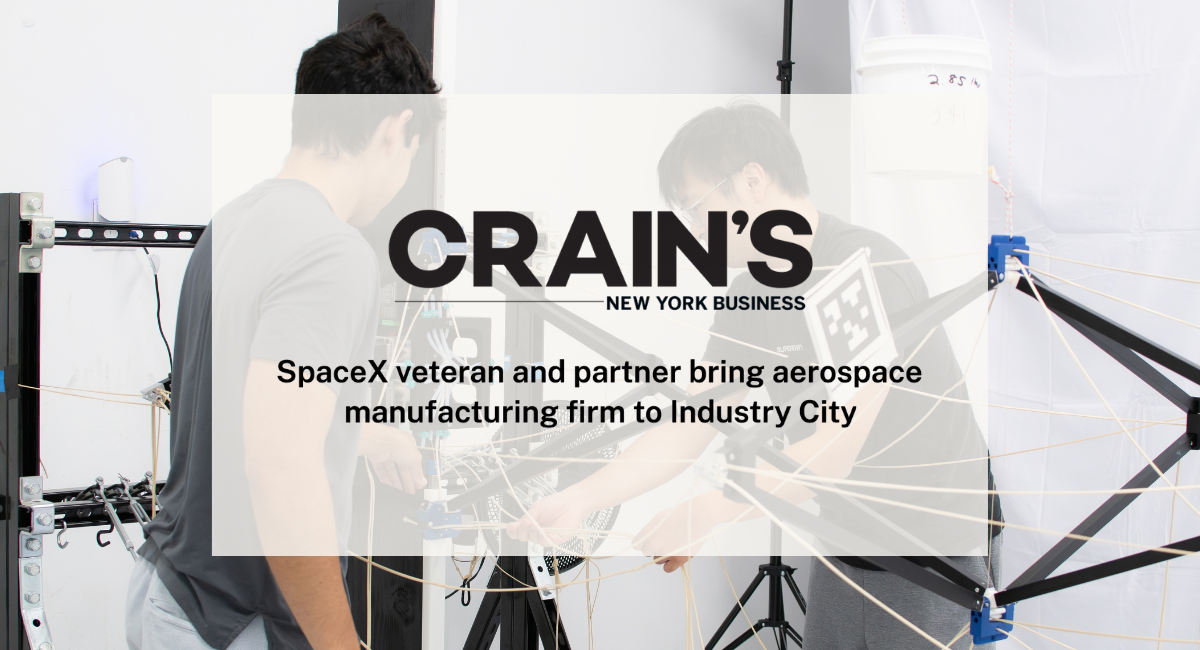
SpaceX veteran and partner bring aerospace manufacturing firm to Industry City
Article originally written for Crain's by By Julian Nazar An aerospace hardware manufacturer has officially landed in New York City....
BEYOND REACH LABS REVIVES NEW YORK’S PLACE IN SPACE One Orbital Solar Array at a Time from Its New Industry City Headquarters
Decades after New York helped land Apollo on the moon, a team of SpaceX veterans is writing the city's next...
Industry City Inc. 5000 2026: 3 Tenants Named to the List
Three Industry City tenants — Highline Commerce, CITIBIN, and Tailored Industry — made the 2026 Inc. 5000, the annual ranking...